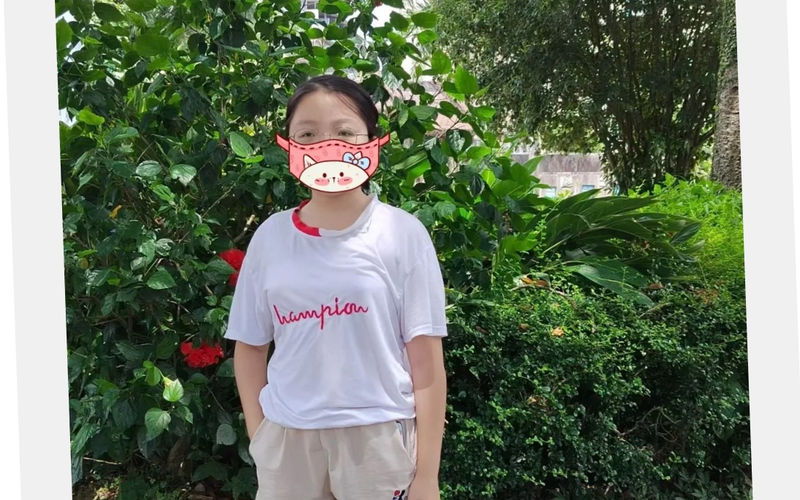
After Curing Thalassemia: Endless Possibilities at 20
November 13, 2025
After 16 years of transfusions for severe beta-thalassemia, Zhou Zhou underwent a stem cell transplant and, nine months later, reached a normal hemoglobin of 131 g/L.
Zhou Zhou from Guangxi Province has severe beta-thalassemia. After 16 years of blood transfusions, she and her family chose hematopoietic stem cell transplantation (HSCT). In 2021, the soon-to-be 17-year-old found the team led by Director Liao Jianyun. After two years of continuous iron chelation therapy, she underwent HSCT at the Southern Chunfu (Children's) Institute of Hematology, Gobroad Medical (Hematology) Guangdong Research Center in 2023. Nine months later her hemoglobin reached 131 g/L, a completely normal level.
Zhou Zhou's Profile
She is 19 years old with severe beta-thalassemia. Diagnosed in 2004, she began transfusions and iron chelation, with severe iron deposition in the heart and liver in later stages. She first visited the Chunfu Institute in 2021, underwent iron chelation and pre-transplant preparation from 2021 to 2023, was admitted to the transplant ward on July 20, 2023 for HLA-matched unrelated donor HSCT from the China Marrow Donor Program, and was discharged on August 30, 2023.
At 16: Wanting to Live, Not Just Survive
Apart from being small, thin and pale, Zhou Zhou did not look ill, but constant fatigue always reminded her she was a patient. Back in 2004, three-month-old Zhou Zhou was pale and listless and was diagnosed with severe beta-thalassemia. "Every time I receive a blood transfusion, it's like refueling my body. But that fuel is quickly consumed," she said. Over sixteen years, the interval between transfusions kept shortening. Long-term transfusions damaged her blood vessels and caused iron deposition in her myocardium, liver and pancreas, and blood shortages sometimes made transfusion hard even when her hemoglobin was very low. Guangxi is a high-incidence area for severe beta-thalassemia, and many of her friends who relied on transfusions had blackened skin, enlarged livers and spleens, and racing hearts. "I want to live like a normal person, not just survive."
At 18: Deciding on Transplantation
In 2021 Zhou Zhou and her mother came to the Southern Chunfu Institute. No fully matched donor was found at first, but Professor Li Chunfu's team had a mature haploidentical transplant program, giving them hope. However, she had severe cardiac and hepatic iron deposition, with ferritin as high as 16,000 ug/L, requiring pre-transplant conditioning. Fortunately, once iron was reduced to 5,000 ug/L, she matched with a fully compatible unrelated donor from Hunan through the China Marrow Donor Program, and Director Liao Jianyun's team formulated an HLA-matched unrelated donor HSCT plan. In July 2023 she entered the transplant ward. Because of her relatively older age, her platelets remained low after myeloablation and she developed massive hematemesis, bladder bleeding and epistaxis. The doctors' calm reassured her; on the 15th day her blood cells finally began to rise and bleeding improved as her immune and hematopoietic functions rebuilt.
At 20: Endless Possibilities
More than nine months after discharge, Zhou Zhou describes her life in one word: incredible. No longer troubled by transfusions, she feels strong and light. "In the past, my goal was to get transfusions and survive." Now she can slow down and enjoy the scenery. She plans to return to school and choose a major she likes. She and her mother plan to clean the first floor of their home to host friends who come for transfusion and iron chelation. "After I go home, I will tell my friends that if they have the conditions, they should undergo transplantation as soon as possible." Even without a fully matched donor and even without wealth, taking that step may lead to a solution and a brand-new start.
Related Images