One Intervention, a 91% Reduction in Breast Nodules: Inybrain tiNK Demonstrates Breakthrough Results
June 03, 2026
After seven years of failed treatments for a breast nodule, Ms. Liu saw 91% shrinkage in one month with a single Inybrain tiNK immune-trained NK cell intervention.
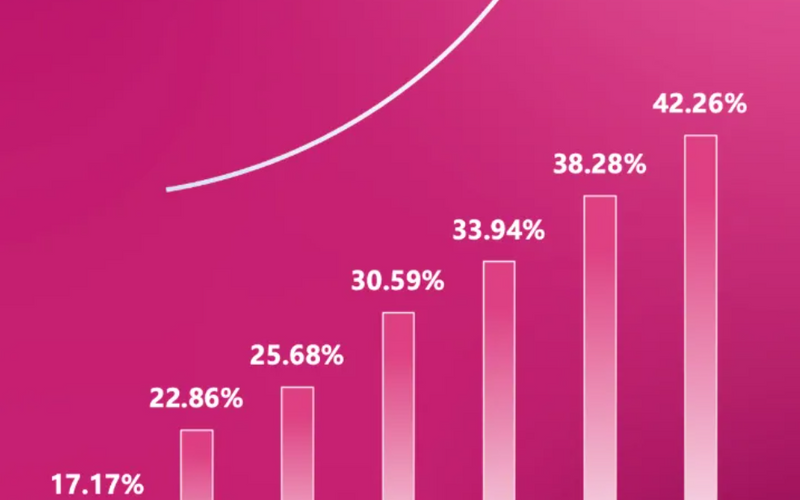
For most women, seeing the term "breast nodules" on a physical examination report brings intense psychological stress. According to the 2025 China Women's Health Pink Report, among women who underwent breast ultrasound, the detection rate of breast nodules surged from 17.17% in 2019 to 42.26% in 2025 — more than doubling in seven years, and projected to exceed 50% by 2028.
Against this backdrop, Ms. Liu from Shenzhen received her own "medical surprise" in early 2026.
Seven Years of Seeking Treatment: From a Mother of Two to a "Nodule-Anxious Patient"
The story dates back six to seven years. Shortly after giving birth to her second child, Ms. Liu suffered acute mastitis. Although the inflammation subsided, it seemed to leave lasting aftereffects: severe breast pain before menstruation became a monthly nightmare. A later examination confirmed her fears — a 14×8 mm solid nodule in her left breast and a 7×3 mm cyst in her right breast.
BI-RADS category 3 means the malignant risk is less than 2%, and doctors usually recommend short-term follow-up or observation. But for Ms. Liu, the psychological burden of this "time bomb" was far heavier than the medical grade suggested. Over the next six to seven years she visited many hospitals and tried various regimens — from conventional anti-inflammatory drugs to seemingly advanced stem cell therapy — spending a lot of money and time, with unsatisfactory results.
Treatment Dilemma: When "Watchful Waiting" Becomes Torment
Current clinical management for breast nodules mainly includes regular follow-up, medication, and surgical intervention — but each has limitations:
- Regular follow-up: for low-risk benign nodules, re-examination every 3–6 months is usually recommended. During long-term follow-up, about 12.8% of nodules increase in volume and 2.1% may change in nature. This passive waiting easily triggers anxiety — a study by the School of Psychological and Cognitive Sciences, Peking University, showed anxiety scores of patients on long-term follow-up were 41.3% higher than the general population.
- Medication: existing drugs are mainly hormone-regulating agents that only relieve symptoms such as breast pain, with limited effect on reducing nodule volume. They require continuous use for over 6 months, and some patients experience side effects such as menstrual irregularities.
- Surgical intervention: traditional surgery carries incision scars and mammary tissue damage, with a postoperative infection rate of about 2.3%–4.5%. For women of childbearing age, it may damage mammary ducts, leave scars, and even affect lactation.
Turning Point: Meeting Inybrain tiNK Immune-Trained NK Cells
The turning point came on February 2, 2026, when Ms. Liu received Inybrain tiNK immune-trained NK cell therapy, with a single intervention dose of 3 billion tiNK cells. After the intervention, when her menstruation arrived, the severe breast pain that had plagued her for six to seven years did not appear at all.
On February 28, nearly one month later, another ultrasound left her hardly able to believe her eyes: the solid nodule in her left breast, originally 14×8 mm, had shrunk to 5×2 mm — an astonishing 91% reduction. The cyst in her right breast also shrank from 7×3 mm to 5×3 mm, a 28.5% reduction. From a category 3 nodule to near disappearance — in just one month, with only one intervention. "I didn't expect one tiNK intervention to have such an effect," Ms. Liu said. "It's truly a surprise!"
Innovative Breakthrough of Inybrain tiNK Immune-Trained NK Cell Therapy
Inybrain tiNK immune-trained NK cells are NK cells activated by special factors and cultured through immune training — a method that simulates NK cells under stress conditions, using high-intensity cytokines to enhance their killing ability, like training a "new special forces soldier" into a "special forces champion."
After entering the body, tiNK cells act on breast nodules through two pathways:
1. By recognizing low-expressed MHC-I molecules on the surface of nodule cells, they directly release perforin and granzyme to induce apoptosis of abnormal nodule cells. This process does not damage normal breast tissue; the intervention is mild, with no obvious side effects and fast recovery.
2. By secreting various cytokines for immune regulation, they activate DC cells and T cells to fight synergistically, rebuild the weakened immune defense, and regulate immune balance — reducing existing nodules and strengthening the immune system's ability to monitor and clear abnormal cells, fundamentally lowering recurrence risk.
For safety, the therapy uses non-viral vectors and non-gene-editing technology, avoiding risks caused by gene editing, and adopts feeder cell-free, serum-free, full-factor culture. Its universal off-the-shelf feature eliminates the need for personalized customization and allows allogeneic use, greatly shortening the treatment cycle and reducing costs.
Cutting-Edge Technology Opens a New Solution Path
In Ms. Liu's case, 3 billion "trained" NK cells likely precisely identified and cleared cells causing inflammation and abnormal proliferation, remodeling the immune microenvironment. They not only greatly reduced the solid nodule but also eliminated the premenstrual pain that had troubled her for years. This treatment model, based on activating the body's own immune function, breaks the traditional binary choice of "surgery or observation."
Ms. Liu's case is just one example of Inybrain's tiNK cell therapy exploration in non-oncological fields. Inybrain's clinical pipeline covers solid tumors and hematological tumors and shows potential in autoimmune diseases, neurological diseases, and nodular diseases. For millions suffering from breast nodules, thyroid nodules, pulmonary nodules, and similar conditions, this early-spring 2026 case may signal that the "third solution" — after surgery and medication — is accelerating toward us.
Related Images