Facing Over 40 Million Infertile Patients: What Can We Do?
June 10, 2026
At Jiahui's Reproductive Medicine Center, Director Pang Wenjuan blends precision medicine with humanistic care — from an embryo consultation clinic to personalized strategies.
"Not wanting to have children when able, struggling to conceive when ready, risking miscarriage after conception, and facing the possibility of birth defects even if the pregnancy is carried to term." This is a somewhat cruel quip, yet it truly reflects the helplessness many of childbearing age feel in the face of modern reproductive challenges.
Reproductive Medicine Needs Space to Embrace Humanistic Care
National statistics show China's total fertility rate has plummeted from around 6 in the 1970s to a mere 1.0 in 2023, far below replacement level. At the same time, the infertility rate among childbearing couples has risen from 2.5%–3% two decades ago to 12.5%–15% today, with the number of patients exceeding 40 million. A 2023 World Health Organization report noted that between 1990 and 2021, 17.5% of the world's adult population suffered from infertility, with a 12-month period prevalence of failing to conceive as high as 12.6%.
In 2025, Director Pang Wenjuan officially joined the Reproductive Medicine Center of Jiahui International Hospital. A senior specialist with more than a decade of experience in military hospitals, she used to shuttle between high-intensity clinics and surgeries, making quick decisions within limited time. In her new environment, she has chosen to slow down and rethink the essence of being a "doctor."
She explained that in many hospitals, despite continuous investment in research, the patient experience is often overly rational — an extremely high outpatient volume leaves no time for in-depth communication, standardized processes make personalized follow-up difficult, and it is even harder to help patients cope with anxiety during treatment fluctuations. Hospitals often focus on "completing a surgery" rather than "accompanying a family."
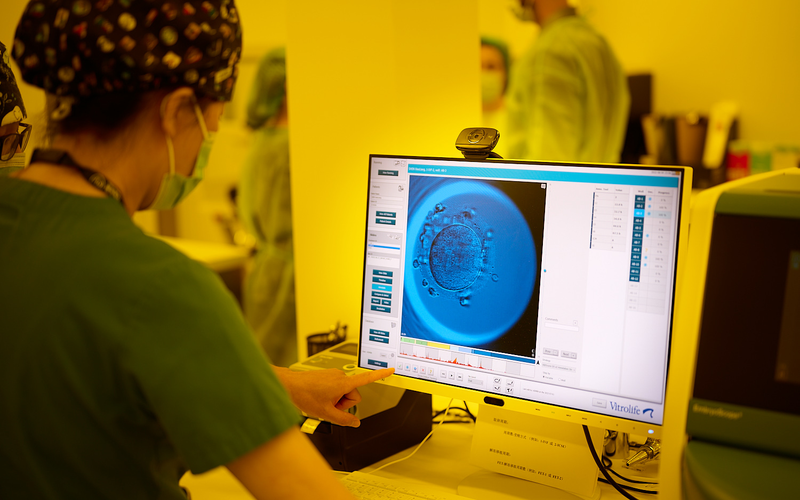
Against this backdrop, the center integrates humanistic services with precision medicine. Rather than making patients wait and visit repeatedly, it offers comprehensive assessments of endometrial receptivity and tests such as sperm DNA fragmentation index (DFI) and seminal plasma biochemistry. Time-lapse dynamic culture systems monitor embryonic development in real time and combine AI algorithms for a more rigorous embryo evaluation. Single blastocyst transfer is prioritized to reduce multiple-pregnancy risk; in case of transfer failure, active intervention ranges from three-dimensional ultrasound uterine cavity assessment to hysteroscopy. Immunity, thrombosis, endocrine, and metabolic examinations are integrated with traditional Chinese medicine physical therapy, alongside nutritional, psychological, and physiological assessments — without forcing patients to rush into the next cycle.
A Former Public Hospital Doctor's New Goals at Jiahui
Director Pang plans to promote a complete, future-oriented fertility service system that breaks the fragmented limitations of traditional reproductive medicine. For instance, responding to growing attention among young women to fertility preservation, she proposed a Fertility Preservation Decision-Making Clinic for women aged 25 to 35 with no immediate fertility plans. Through scientific assessment of ovarian reserve (AMH and AFC tests), professional legal consulting, and egg-freezing education, it helps them make rational decisions during their prime childbearing years.
Facing challenges such as endometrial receptivity, repeated implantation failure (RIF), and recurrent spontaneous abortion (RSA), she leads her team to explore more precise strategies.
01 Repeated Implantation Failure (RIF)
She uses endometrial receptivity testing (ERT) to identify the individualized implantation window by analyzing the expression of more than 100 related genes in endometrial tissue. With three-dimensional ultrasound and hemodynamic assessment, doctors judge uterine cavity morphology, endometrial thickness, blood perfusion, and peristaltic rhythm. For thin endometrium, she promotes new methods such as growth hormone (GH) administration and intrauterine perfusion of granulocyte colony-stimulating factor (G-CSF) and platelet-rich plasma (PRP).
02 Polycystic Ovary Syndrome (PCOS)
She advocates integrating risk identification, ovarian stimulation strategies, and metabolic management. Through pre-treatment weight management, OGTT screening, replacing standardized long protocols with antagonist and PPOS protocols, and individualized Gn dose adjustment, OHSS risk is reduced. The Jiahui Medical APP platform continuously monitors potential postoperative OHSS symptoms. She proposed a PCOS Full-Cycle Management Pathway, connecting departments and integrating nutritionists, sports medicine experts, and remote health management teams.
03 Endometriosis
She emphasizes precise preoperative lesion assessment and postoperative fertility protection. The reproductive and gynecology teams use MRI combined with TRUS to assess deeply infiltrating lesions, with AMH and AFC to evaluate ovarian reserve. Through mild stimulation protocols, dual trigger, and traditional Chinese medicine physical therapy, she addresses poor ovarian response after surgery.
Jiahui has a sound multidisciplinary team (MDT) mechanism. Director Pang recalled a recent consultation with an expatriate couple in which, beyond explaining the differences between Chinese and foreign IVF protocols, the hospital's Overseas Medical Department assisted with fertility demand consulting and psychological assessment (overseas patients also come to China for treatment, such as a recent patient from Bangladesh who requested IVF at Jiahui). When she encounters endometriosis complicated with infertility, she immediately collaborates with the gynecology and pain departments to formulate a surgery–IVF connection plan, instead of a one-way referral.
Professionalism as the Foundation, Philosophy as the Light
After joining Jiahui, Director Pang's biggest feeling is that "the relationship between doctors and patients has changed." What truly attracted her is the philosophy of placing people at the center of medical care. An appointment-based outpatient model gives each patient ample time; diagnosis and treatment are conducted in private, quiet rooms with one-on-one nursing follow-up. Many patients say after their first consultation: "For the first time, I feel that seeing a doctor can be a reassuring experience."
What touches her most is Jiahui's Embryo Consultation Clinic. Patients undergoing IVF are extremely anxious on the day they come to see their embryos after oocyte retrieval. Because embryos can only be observed under a high-power microscope, doctors used to only report the number and morphological grades. Now, through a video link system, patients can watch dynamic images of embryonic development right in the consulting room — abstract embryos become concrete, giving patients great physical and mental support.
She once treated a female patient who had repeatedly failed IVF and was on the verge of emotional collapse. She contacted a psychologist, adjusted her medication and treatment rhythm, and patiently accompanied her through the low point. Eventually, the patient became pregnant. "At that moment, I realized that what we do is not only to help people get pregnant, but also to safeguard their confidence and hope."
Director Pang is exploring AI in assisted reproduction — integrating ovarian function, lifestyle, and disease background to generate individualized suggestions, and using embryo image and clinical outcome data for machine learning modeling to guide patients with repeated implantation failure. "Professionalism is our foundation, and philosophy is the light that illuminates our direction," she said. Only with both cutting-edge technology and gentle companionship can medical care truly return to its most original meaning.
Related Images