China's Brain-Computer Interface Revolution: The World's First Commercial Implantable BCI Surgery
August 09, 2026
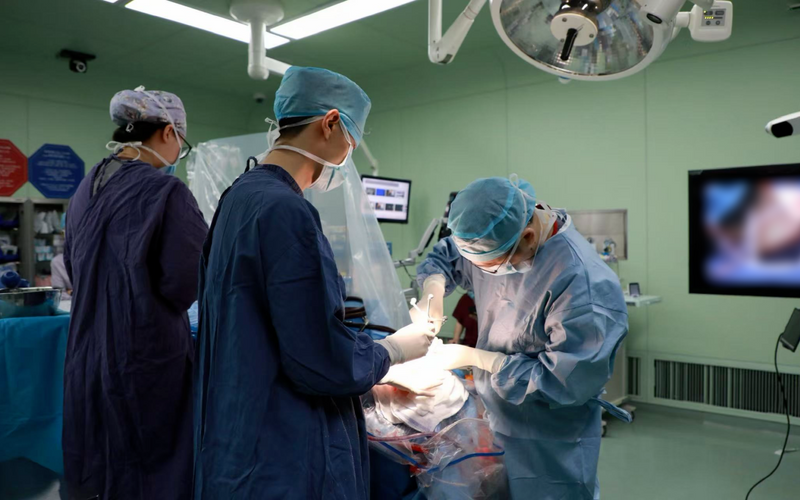
On July 13, 2026, Shanghai's Huashan Hospital performed the world's first commercial surgery with a fully implantable, domestically approved BCI — the Neuracle NEO system.
On July 13, 2026, Shanghai became the site of a defining moment for 21st-century neuroscience: the world's first commercial surgery using a fully implantable, domestically approved Brain-Computer Interface (BCI) device — the NEO system, developed by Neuracle Medical Technology — was successfully performed at Fudan University's Huashan Hospital. The NEO system had received China's Class III medical device registration certificate on March 13, 2026, becoming the world's first commercially approved invasive BCI product. China's health system then moved at remarkable speed: the NHSA had pre-emptively established national pricing codes for BCI procedures in 2025, while Shanghai's supplemental commercial insurance scheme — "Huimin Insurance" — incorporated the NEO device into its coverage immediately after approval.
What Is an Implantable BCI — and Why Does It Matter?
A Brain-Computer Interface (BCI) is a direct communication pathway between the human brain's neural signals and an external device or computer. Unlike non-invasive EEG headsets, a fully implantable BCI surgically places microelectrode arrays directly onto or within the cortex, enabling high-resolution, real-time decoding of neural intent.
This precision unlocks capabilities previously confined to science fiction: patients with complete paralysis can control computers, robotic limbs, or even stimulate their own muscles to move again — using thought alone. For patients suffering from ALS (Amyotrophic Lateral Sclerosis), spinal cord injuries, stroke-induced paralysis, and severe epilepsy, a well-functioning BCI can mean the difference between complete dependence and meaningful quality of life.
The July 13 Milestone: From Approval to Operating Room in 122 Days
The NEO system by Neuracle is a minimally invasive, epidural BCI device — a technically important distinction. Rather than penetrating the brain cortex, NEO places electrodes on top of the dura mater, reading high-quality brain electrical signals from outside the brain's protective membrane. Key clinical features:
- Target population: Cervical spinal cord injury patients with tetraplegia — specifically those unable to perform voluntary hand grasping.
- Mechanism: Decodes epidural EEG signals representing motor intent, enabling patients to control hand movement through thought.
- Minimally invasive: Epidural placement (vs. intracortical penetration) dramatically reduces infection risk and surgical complexity.
- Intraoperative result (July 13): Stable signal quality confirmed, patient vitals remained normal throughout.
Meanwhile, NeuroXess — China's other leading invasive BCI pioneer — completed the country's first fully wireless, fully battery-integrated BCI implant in a 28-year-old spinal cord injury patient in late 2025. By April 2026, a second patient was using the NeuroXess-FES integrated system to eat and draw autonomously. NeuroXess is currently in the registration-stage clinical trial phase.
The Policy Architecture: How China Built the World's First BCI Insurance Framework
China's approach was uniquely proactive — building the insurance infrastructure before the first device was even approved. The multi-layered framework includes:
- National Pricing Codes (2025): The NHSA proactively established pricing items — "Invasive BCI Implantation Fee," "Invasive BCI Removal Fee," and "Non-invasive BCI Adaptation Fee" — creating the national billing pathway in advance. Provinces including Hubei, Zhejiang, and Sichuan have already implemented guided prices (approx. ¥6,000–¥6,600 per implantation).
- Commercial Supplemental Insurance (2026): Shanghai's "Huimin Insurance" incorporated NEO device costs into its coverage almost immediately after the March 2026 NMPA approval.
- Regulatory Clarity (2026): On June 30, 2026, the NMPA published the Guiding Principles for BCI Device Classification, categorizing devices by risk tier (Class II and III).
- National Strategic Priority: BCI is designated as a "future industry" in China's 15th Five-Year Plan (2026–2030), ensuring sustained policy and funding support.
China's BCI Ecosystem: From Lab to Clinical Pipeline
China's BCI momentum extends far beyond a single hospital or device. A coordinated national strategy is accelerating the entire ecosystem:
- National BCI Innovation Centers: Dedicated research institutes under the 14th and 15th Five-Year Plans, with key hubs in Shanghai, Beijing, and Shenzhen.
- Top-tier Clinical Partners: Major neurosurgery centers at Huashan Hospital (Fudan University) — site of the world's first commercial BCI surgery — Ruijin Hospital (Shanghai Jiao Tong University), and the PLA General Hospital are actively conducting BCI implantation and rehabilitation research.
- Invasive BCI Leaders: Neuracle holds the world's first NMPA commercial approval (NEO, March 2026). NeuroXess is advancing its fully wireless implantable system through registration-stage trials. Note: BrainCo is a leading non-invasive BCI company known for EEG wearables and bionic prosthetics — a distinct, complementary segment.
- Academic Output: China leads globally in BCI-related peer-reviewed publications, with Shanghai-based teams contributing foundational work on flexible electrode arrays, neural decoding algorithms, and high-channel-count neural recording.
For international patients and institutions, navigating China's rapidly evolving BCI landscape requires a trusted, expert partner with deep institutional access. MedTourChina connects global patients and B2B medical partners directly to China's most advanced clinical programs, with a network spanning 60+ top-tier public hospitals — including the leading neurosurgery centers now at the forefront of BCI clinical deployment:
- Expert Neurology Consultations: Rapid case review with China's leading neurosurgeons and BCI specialists to assess candidacy for implantable BCI surgery, deep brain stimulation (DBS), or related neuromodulation therapies.
- Clinical Trial Access: For eligible international patients, priority access to China's active BCI clinical trials at significantly reduced cost.
- Hospital Partnership Programs: For international hospitals and rehabilitation centers, MTC facilitates knowledge transfer, Chinese expert teaching visits, and joint clinical research frameworks.
- Seamless Medical Journey Support: Complete logistical management including medical visa facilitation, 144/240-hour visa-free transit optimization, bilingual medical escort, and end-to-end care coordination.
Related Images