Bone 02: Woman with Lumbar Disc Herniation Cured Without Metal Screws Using Bone Adhesive
August 10, 2026
Bone 02, the world's first China-developed bone adhesive, has secured China NMPA and U.S. FDA Breakthrough recognition, replacing metal screws in fracture and spine repair.
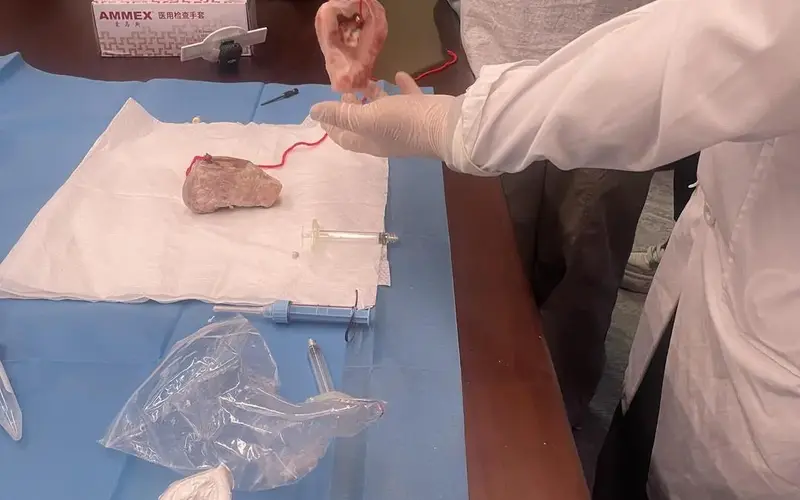
Crushed bone fragments can now be bonded with medical adhesive. Bone 02, the world's first bone adhesive material developed by a Zhejiang medical team, delivers instant, powerful adhesion in the human blood-rich environment and has achieved another breakthrough. It has successively secured clearance under China's Special Review Procedure for Innovative Medical Devices and U.S. FDA Breakthrough Device Designation — a pivotal step toward clinical application for this fully domestically researched and manufactured Chinese innovation.
Over 150 Patients Enrolled in Clinical Trials
Last year, the orthopedic team at Sir Run Run Shaw Hospital, Zhejiang University School of Medicine (SRRSH) unveiled this landmark homegrown innovation: a biomaterial capable of bonding and fixing bone fragments of all sizes.
Professor Fan Shunwu, Director of the Department of Orthopedics at SRRSH, explained that complex orthopedic cases such as comminuted fractures and age-related fragility fractures have long relied on metal internal fixation. This method brings large surgical trauma, lengthy recovery, and high risks of complications including fixation loosening and surgical site infection. For decades, the global orthopedic field struggled to develop viable bone adhesives, held back by two core bottlenecks: insufficient biological safety and weak adhesive force in blood-filled environments.
After a decade of intensive research, the SRRSH team overcame these hurdles to develop Bone 02. The material rapidly bonds bone fragments under the body's moist physiological environment with stable strength. It gradually degrades naturally as new bone regenerates and is fully replaced by autologous osseous tissue, driving a revolutionary shift from mechanical metal fixation to biological adhesion.
To date, Bone 02 has completed the world's first multicenter randomized controlled trial (RCT) for bone adhesive fracture therapy across top-tier institutions, including the Second Affiliated Hospital of Zhejiang University School of Medicine, Shanghai Sixth People's Hospital (National Center for Orthopedics), and the First Affiliated Hospital of University of Science and Technology of China. More than 150 randomized controlled cases were fully enrolled, followed up, and completed.
Trial data revealed striking advantages versus the control group: drastically reduced fracture displacement, over 50% shorter intraoperative bone fragment fixation time, substantially enhanced surgical safety, accelerated bone union, and shortened rehabilitation cycles.
In January 2026, Bone 02 entered the Special Review Procedure for Innovative Medical Devices administered by China's National Medical Products Administration (NMPA). In April the same year, it received FDA Breakthrough Device Designation. Industry experts noted this marks the first time a Chinese original orthopedic device has obtained dual regulatory recognition from top Chinese and U.S. regulators.
Barely Able to Walk, Ambulatory Within Three Days After Surgery
The R&D team continues expanding clinical applications, launching exploratory trials of Bone 02 for spinal surgery and dental implants.
Traditional lumbar fusion requires implanting multiple pedicle screws, which demand extensive soft tissue dissection, trigger heavy blood loss, and raise screw-related complication risks. Bone 02 pioneers a minimally invasive fusion alternative: biological bonding replaces mechanical screw fixation to achieve stable fusion of bone graft zones. Preliminary data show marked relief of lumbar symptoms, with superior fusion outcomes and long-term recovery compared to conventional screw-based procedures.
For dental implant patients with severe alveolar bone loss who cannot undergo immediate implant surgery, early research confirms Bone 02 delivers exceptional adhesion to bone tissue and robust in-vivo osteogenic potential.
Ms. Wang, a patient in her 40s, is one of Bone 02's beneficiaries. She suffered recurrent lower back pain from lumbar disc herniation three years ago, which progressed to radiating pain in her left hip and leg last year. "The pain was so severe I could not walk on my left foot."
She sought treatment at SRRSH's Orthopedics Department. Examinations and imaging confirmed her lumbar disc herniation was compressing nerve roots. To permanently resolve the compression, the team performed Transforaminal Lumbar Interbody Fusion (TLIF) at the L4/5 segment.
"My doctor asked if I wanted to join the Bone 02 clinical trial. I initially worried the adhesive might not hold firmly, yet I refused to have metal screws implanted in my lumbar spine, so I decided to participate," Ms. Wang shared. "I could walk on my own three days after surgery, and the leg pain vanished. Within two to three weeks, I fully resumed normal daily life at home."
Associate Chief Physician Lin Xianfeng, Deputy Director of Orthopedics and lead researcher of the Bone 02 team, noted that multiple hurdles remain before widespread use — including scaled-up manufacturing, global multicenter trials, and worldwide market access. The team will leverage the platforms of Zhejiang University and SRRSH to cooperate with the NMPA and relevant authorities, accelerating clinical translation to benefit millions of fracture patients.
Related Images