
aHUS: A Rare, Fast-Onset Disease Cured With Complement Inhibitors
November 18, 2025
A 74-year-old woman with atypical hemolytic uremic syndrome (aHUS) was weaned off dialysis at Sir Run Run Shaw Hospital thanks to complement inhibitor therapy.
"She could still walk with a mobility aid a few days ago, how did she suddenly become critically ill?" In early September, 74-year-old Ms Bao deteriorated within days from general fatigue to acute kidney failure. The culprit was atypical hemolytic uremic syndrome (aHUS). Thanks to precise treatment by a multidisciplinary team at Sir Run Run Shaw Hospital, Zhejiang University School of Medicine, she was weaned off dialysis on the 22nd day of onset.
Hidden Lethal Risks in Everyday Discomfort
At first Ms Bao only felt tired with a poor appetite and, mistaking it for heat-related discomfort, took Huoxiang Zhengqi Pills on her own. Over the next days her urine output dropped, her abdomen swelled, and her legs became visibly swollen. At a local community hospital her hemoglobin was only 59 g/L (normal 115-150 g/L for adult women) and her creatinine soared to 1,197 umol/L (normal 41-81 umol/L), confirming severe anemia and acute kidney failure. She was urgently transferred to the Emergency Department of the hospital's Qingchun Campus.
Multiple Abnormalities Pinpoint the Culprit
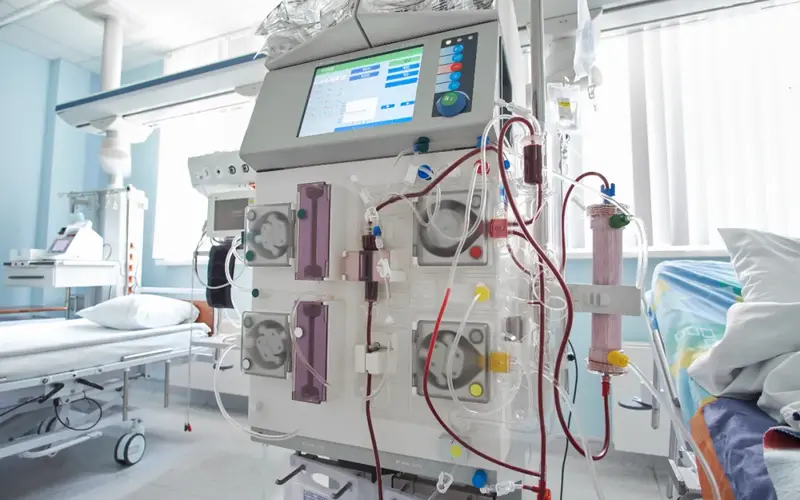
Dr. Wenyu Xiang from Nephrology noted the illness was more complex than anemia plus kidney failure: elevated lactate dehydrogenase, a sharp rise in D-dimer, metabolic acidosis and electrolyte imbalance. She was admitted to the ICU for blood transfusions, hemodialysis and high-dose hormone therapy. Chief Physician Libin Ma found hemoglobin failed to rise after transfusion and abnormally shaped red cells of varying sizes; platelets, though within range, had dropped significantly. Decreased complement C3 with normal C4 pointed to thrombotic microangiopathy (TMA).
Once stabilized, Ms Bao was transferred to the Dayunhe Campus under Deputy Chief Physician Junnan Wu. Dr. Yimeng Zhu arranged a renal biopsy and complement tests: serum total complement CH50 was 54.8 U/mL (normal 23-46), soluble membrane attack complex sC5b-9 reached 1,734 ng/mL (normal 75-219), with low C3 and C1q and normal C4, strongly indicating complement involvement. The team ruled out thrombotic thrombocytopenic purpura (TTP) and typical hemolytic uremic syndrome (HUS), diagnosing atypical hemolytic uremic syndrome (aHUS).
Understanding aHUS
Think of the complement system as a defense force. In aHUS this force spirals out of control, mistaking the body's own blood vessels for enemies: red cells are destroyed (hemolytic anemia), platelets are depleted (thrombocytopenia), and clots form in tiny vessels, damaging organs, especially the kidneys. Due to its sudden onset and rapid progression, aHUS has a high mortality rate.
Specialized Treatment and Multidisciplinary Collaboration
Conventional therapies such as hormones and plasma exchange had limited effect. Modern medicine offers complement inhibitors (e.g., eculizumab), which act like a stop button for the overactive complement system. Teams from Nephrology, Hematology, Critical Care Medicine and Laboratory Medicine worked together. After three infusions, hemoglobin rose from a low of 48 g/L to 85 g/L, creatinine dropped from 1,197 to 142 umol/L, urine output returned to normal, and complement markers normalized. On the 22nd day her dialysis catheter was removed. After nearly a month she was discharged, needing only follow-up and maintenance therapy.
Research shows 83% of aHUS patients can be weaned off dialysis with timely complement inhibitor therapy. Seek immediate care for severe fatigue and pale skin (possible hemolytic anemia); skin petechiae, bruising, gum bleeding or nosebleeds (possible thrombocytopenia); or significantly reduced urine output and swelling (possible kidney damage). Extra vigilance is needed with severe hypertension, pregnancy (especially postpartum), autoimmune disease, malignant tumors, organ transplantation, or certain medications.
Related Images