
CyberKnife for Brain Tumors: A Radiation Oncologist's In-Depth Explanation
July 24, 2026
How CyberKnife robotic radiosurgery treats brain tumors non-invasively, illustrated by three real brain metastasis cases with strong follow-up outcomes.
Understanding CyberKnife
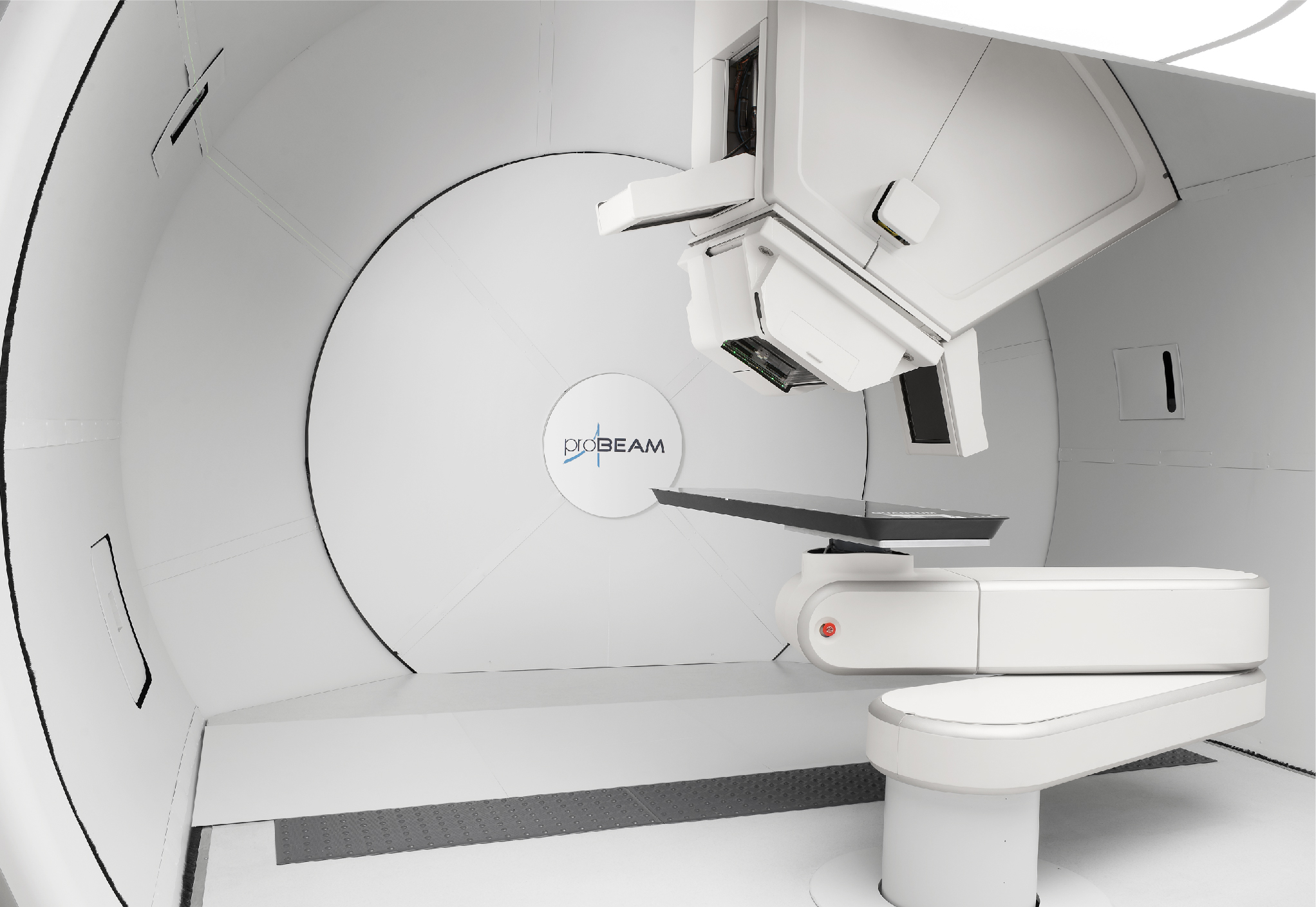
CyberKnife is the world's first automated robotic radiosurgery system, embodying Stereotactic Body Radiotherapy (SBRT) principles. It delivers high-precision, personalized treatment suitable for most solid tumors throughout the body.
This dedicated stereotactic radiosurgery system is characterized by its accuracy, patient comfort, versatility, and safety. It can replace traditional surgery for tumors in various locations, aiming to eradicate early-stage tumors in just 1-5 treatment sessions.
With a flexible robotic arm and synchronized respiratory tracking, CyberKnife can select beam paths from multiple directions for focused, stereotactic irradiation. This delivers high doses to the tumor while minimizing damage to surrounding healthy tissue, achieving sub-millimeter precision and optimal protection of organs at risk.
Below are typical brain tumor cases showcasing its results.
Case 1
Patient: 76-year-old male presenting with unexplained headaches, described as paroxysmal distending pain lasting several minutes per episode, accompanied by (non-vertiginous) dizziness and a sensation of head heaviness. No nausea, vomiting, visual disturbance, tinnitus, hearing loss, slurred speech, limb convulsions, impaired consciousness, or fever. Intravenous therapy at a local hospital brought no significant improvement.
Admission findings: Cranial CT showed multiple lacunar infarcts / encephalomalacia foci in the bilateral basal ganglia and corona radiata; a high-density focus in the left occipitoparietal lobe and a low-density focus in the left temporal lobe, with metastasis not ruled out.
Clinical challenge: Multiple, scattered brain metastases are difficult to target surgically and can lead to missed lesions. If tumors sit in critical areas (motor or language cortex), surgery risks damaging healthy tissue and causing severe deficits like paralysis or aphasia. CyberKnife can track tumor position in real time, accurately target multiple metastases, and minimize damage to normal brain tissue.
Radiation dose: 36Gy in 6 fractions of 6Gy each.
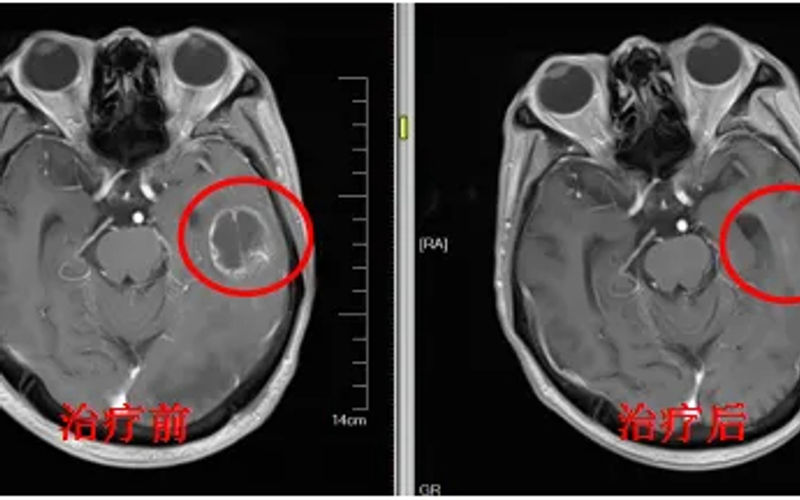
Outcome & follow-up: CyberKnife provided painless, complication-free treatment. Post-treatment review showed significant shrinkage of the high-density focus, and a 6-month follow-up confirmed further marked reduction.
Case 2
Patient: 58-year-old male with a 3-year history of small cell lung cancer. Recent cranial MRI revealed a lesion of about 4.2×3.2×4.4 cm in the right occipital lobe, consistent with lung cancer brain metastasis.
Clinical challenge: Surgery struggled to fully remove the metastatic lesion and risked damaging critical nerves and vessels. For patients in weaker physical condition, CyberKnife's non-invasive, painless approach effectively controls tumor growth, delivering high-dose radiation over a short period while sparing normal tissue and lowering the risk of radiation-induced brain injury.
Radiation dose: 36Gy / 6Gy / 6 fractions.
Outcome & follow-up: The patient underwent CyberKnife in January 2024 with no discomfort. Follow-up showed tumor shrinkage at 3 months, further reduction at 6 months, and complete disappearance after 1 year and 1 month.
Case 3
Patient: Elderly female with an intracranial space-occupying lesion accompanied by seizures for 5 months. CT revealed a nodular focus in the left parietal lobe with surrounding edema, age-related brain changes, and multiple ischemic foci. A nodular focus in the right middle lung lobe was suspicious for malignancy.
Clinical challenge: The metastatic tumor showed infiltrative growth with ill-defined borders, making the resection margin hard to determine; incomplete resection risks recurrence. The patient's advanced age, poor condition, and possible organ dysfunction reduced surgical tolerance. Being non-invasive, CyberKnife avoids surgical trauma and is especially suitable for frail patients, with a relatively short treatment course.
Radiation dose: 36Gy in 6 fractions of 6Gy each.
Outcome & follow-up: The patient underwent CyberKnife on June 28, 2024 with no discomfort. A follow-up over three months later showed the high-density focus had essentially disappeared.
CyberKnife for Malignant Brain Tumors
CyberKnife enables precise tumor localization through real-time image guidance that tracks tumor position during treatment, delivering accurate radiation while causing minimal damage to healthy brain tissue. As a non-invasive treatment requiring no craniotomy, it avoids the trauma and bleeding risks of conventional surgery. No invasive frame fixation, anesthesia, or incisions are needed, ensuring high comfort and quick recovery. Even for irregularly shaped tumors, its non-isocentric beam delivery enables optimal dose distribution.
Key features for malignant brain tumors:
1. Precision: Sub-millimeter accuracy using image guidance with dual orthogonal X-ray imagers to continuously correct for tumor motion.
2. Non-invasive: No surgical incisions or craniotomy, reducing infection and bleeding risks.
3. Broad applicability: Effective for metastatic and primary malignant tumors (e.g., astrocytoma), benign tumors (e.g., meningioma, acoustic neuroma), and deep-seated or eloquent-area tumors.
4. Fractionated treatment: Single or multiple fractions (typically 2-5), reducing damage to sensitive structures like cranial nerves and eyes.
5. High safety: Clinical evidence shows effective tumor control in most (91%) intracranial tumor patients with low complication rates.
Advantages of CyberKnife
CyberKnife has a wide range, treating tumors throughout the body (except hollow organs), including head and neck, liver, lung, and pancreatic cancers, metastases, and soft tissue sarcomas. It also effectively treats intracranial benign conditions such as meningioma, pituitary adenoma, acoustic neuroma, craniopharyngioma, and trigeminal neuralgia.
Compared to conventional radiotherapy:
1. Greater precision: Real-time tracking keeps errors within 1mm.
2. Enhanced comfort: No invasive head frame needed; patients breathe normally.
3. Broader capability: From curative treatment of small early tumors to palliation of metastases and local dose escalation after other radiotherapy.
4. Improved safety: The robotic planning system precisely conforms dose to the tumor, sparing normal tissue and reducing side effects.
As the only comprehensive radiosurgery system offering "no incision, no pain, no bleeding, no anesthesia, and short recovery," CyberKnife provides a painless, non-surgical option for patients who are inoperable, have hard-to-resect tumors, or seek alternatives to surgery.
Related Images